
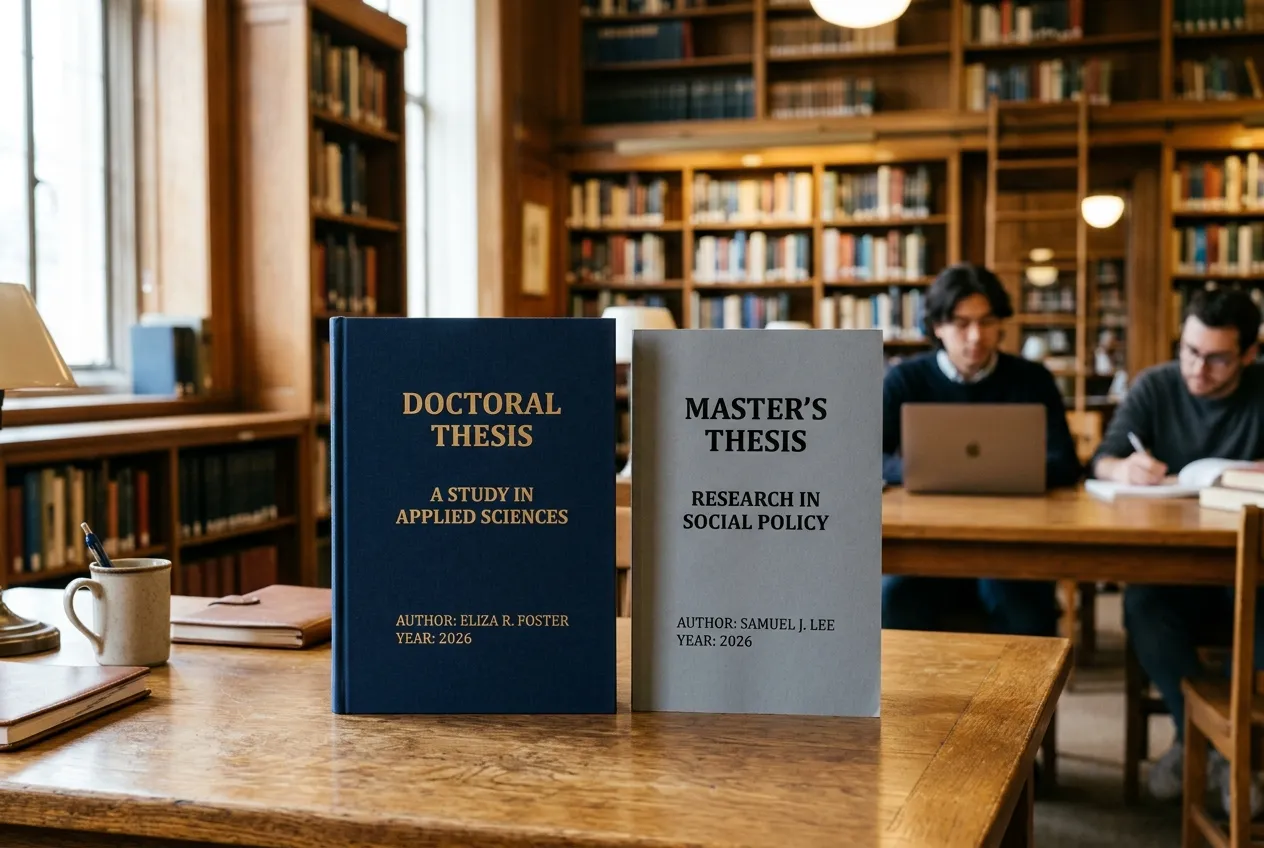
Hardcover vs Softcover Thesis Binding: Which One Does Your University Require? (2026)
Choosing between hardcover vs softcover thesis binding is one of the last decisions students face after finishing their research and submitting the final document. Once the writing, editing, and formatting are complete, students may also need to prepare a physical copy for submission, depending on their university’s requirements.
One of the decisions that can cause unnecessary confusion is choosing between hardcover and softcover binding. Both options can produce a professional-looking thesis, but they are designed for different purposes and may not be accepted in the same circumstances.
Continue reading to understand the differences before sending your thesis to a printer to avoid the chance of paying for a second binding.
How To Choose Between Hardcover vs Softcover Binding?
University requirements should always come first. Some institutions specify the binding type, colour, cover details and even lettering style, while others allow students to choose between several formats.
Here is everything you need to know about both options before reaching out to professional thesis binding services.
What Is Hardcover Thesis Binding?
Hardcover binding uses a rigid cover around the thesis. The cover is generally made from a strong board covered with a suitable material, such as buckram or another durable finish.
The pages are securely bound inside the cover, creating a sturdy document that is designed to withstand repeated handling.
- This option is often associated with final archival or library copies.
- The finished document tends to have a formal appearance, which is one reason some universities require it for final submission.
- Hardcover is also useful when the thesis is expected to remain in a department library for an extended period.
However, hardcover thesis binding is usually more expensive than softcover binding and can take longer to produce.
What Is Softcover Thesis Binding?
Softcover binding uses a flexible cover, usually made from a thicker paper or card stock.
It is lighter and generally less expensive than a hardbound copy. For students who need several working or examination copies, this can make softcover an attractive option.
- This binding method can also be suitable when a university specifically requests a temporary copy in a flexible format.
- The finished thesis can still look neat and professional, particularly when the cover has a clear title and appropriate formatting.
- The main disadvantage is durability. A softcover copy is more susceptible to bending and creasing than a hardcover document.
Most of the students use thesis writing services for final submission to ensure that the content they are submitting is of high-quality.
Hardcover vs Softcover- What Is the Difference?
The most obvious difference is the cover itself, but several other factors can affect your decision.
Here is what makes hardcover different from softcover thesis binding.
Cover
| Hardcover | Softcover |
| The outer part is rigid and durable | You will notice flexibility in the cover |
Appearance
| Hardcover | Softcover |
| This type looks formal and traditional from a distance | It is perceived as simple and practical |
Durability
| Hardcover | Softcover | |
| Is extremely durable | The durability is known to be moderate |
Cost
| Hardcover | Softcover |
| The pricing for this type is usually higher | Costs associated with this are usually lower |
Weight
| Hardcover | Softcover |
| Weighs extremely heavy | Is a lighter choice and is easy to carry |
Best suited to
| Hardcover | Softcover |
| Works best for final or archival copies | It is good for temporary or examination copies |
These differences explain why students should not automatically assume that the more expensive option is the correct one.
Check Your University’s Requirements First
Before choosing the best binding for thesis Canada, look at your university’s current thesis submission guidelines.
Requirements can differ between universities and even individual departments.
Your guidelines may specify:
- Binding type.
- Cover colour.
- Lettering colour.
- Text placement on the spine.
- Title-page format.
- Number of copies required.
- Paper size.
- Whether digital submission is also required.
- Whether the bound copy is retained by the university.
Some institutions may no longer require a physical copy at all, while others may still request one for departmental or archival purposes.
This is very important in 2026 because thesis submission processes continue to vary as universities combine digital repositories with traditional physical records.
When Is Hardcover Usually the Better Choice?
Hardcover tends to make sense when the university requires a permanent copy or when you want the thesis to remain in good condition for years.
Just remember, the same considerations will apply when you compare binding methods for hardcover vs softcover dissertation as well.
A hardbound thesis can be appropriate for:
- Final university copies
If your institution specifically requests a hardbound final version, this should take priority over personal preference.
- Library copies
A library-bound thesis needs to withstand frequent handling, making a rigid cover useful.
- Personal keepsakes
Some students choose hardcover because they want to preserve their research as a long-term record of their academic work.
- Multiple-year use
If your thesis is likely to be referenced repeatedly, a stronger cover can provide additional protection.
When Can Softcover Be More Practical?
Softcover can be the better choice when the university allows it or specifically asks for it.
It is practical for drafts, examination copies and situations where multiple copies need to be produced without a large binding expense.
For example, a student might need several copies for supervisors or examiners before the final version is approved. Using softcover for these copies can reduce costs while keeping the document organized and easy to handle.
The lighter format can also be more convenient if the thesis needs to be transported between home, university and workplace.
After this stage, a lot of researchers prepare their work for publishing. Finding publication support services is another important step for easily adapting a thesis into a journal article or another scholarly format.
What If Your University Allows Both?
Some students may find themselves with several thesis binding options and no strict requirement from their institution.
In that situation, consider what the physical copy is actually for.
- If it is going into a university archive, hardcover is likely to be the more sensible choice.
- A softcover copy may be perfectly adequate if it is mainly being used for review,
Cost can also influence the decision. A student producing several copies may prefer softcover for practical reasons while choosing hardcover for one final personal or archival copy.
FAQS
- Is there an opportunity to change the thesis binding after submitting it?
Normally, when the physical thesis has been officially submitted, any change in its binding will need the department’s permission. It is always good to clarify the format before you go ahead and place the print order.
- Will the binding have any effect on the academic value of the thesis?
No. Binding is more of a formality that does not in any way measure the academic value of the thesis. The academic value is judged based on things like research, methodology, analysis, findings, among others.
- Should I keep a digital copy of the thesis after binding?
Yes. You can keep the last approved version of the thesis in PDF format after binding as a backup and for future academic work.
Key Takeaways
Choosing the right option depends on the requirements set by your university rather than your aesthetic choices. Hardback provides greater longevity and a polished look, thus being appropriate for archival editions. Paperback is more affordable and convenient when a trial or exam copy is needed. Most importantly, you will have to find out your university’s guidelines for submission before placing your order.

Marc Hall has helped students in Canada to get their proper thesis and dissertation binding services. He understands the effort required to create each page, and he makes sure that all work receives excellent presentation. At Thesisbinding.ca, he has created informative articles and blog posts that guide readers through the entire binding process. Marc dedicates his free time to finding creative methods that will improve the thesis binding process for students by making it more efficient.