
Hardcover vs. Spiral Thesis Bindings: Which Is More Durable?
When a thesis is ready for submission, binding can seem like a minor detail compared with months of research and writing. Yet the binding method affects how well the finished document holds up over time. A thesis that will be handled by examiners or kept as a personal record needs a binding method suited to its intended use.
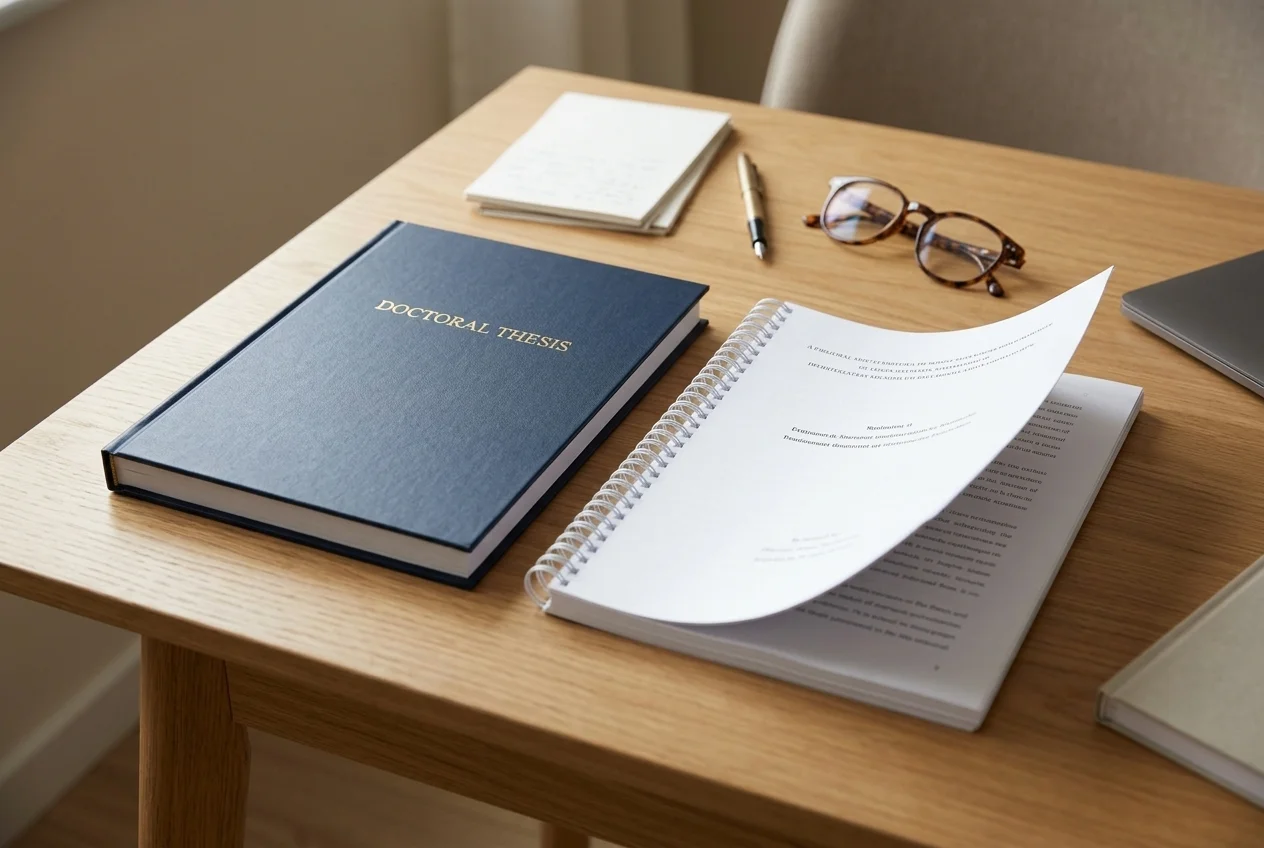
Hardcover and spiral binding are two common options, but they serve different purposes. Hardcover provides a more rigid and permanent structure, while spiral binding offers flexibility and makes the document easier to open and handle during review.
Keep reading to know more about both of these options in terms of durability.
What Makes a Thesis Binding Durable?
Durability is not simply about whether a thesis looks sturdy on submission day. A durable binding should keep the pages securely attached, protect the printed document and withstand repeated handling.
Several factors are considered when it comes to the hardcover vs spiral binding durability discussion:
- The cover material
- Binding mechanism
- Paper quality used
- Thickness of the document
- The frequency of use
The binding method becomes extremely important for a thesis that will be kept for years.
How Durable Is Hardcover Thesis Binding?
Thesis hard binding uses a rigid front and back cover around the thesis pages. The cover may be made from board covered with a durable material such as cloth, paper, or a synthetic finish, depending on the binding method and the supplier.
- Its main advantage is structural strength. The rigid cover helps protect the pages from bending and creasing.
- It also gives the spine additional support, which can be useful when a thesis is stored vertically on a bookshelf.
- A properly produced hardcover thesis can also be suitable for long-term storage and archival purposes.
It also offers a practical advantage when the thesis is likely to be handled repeatedly. The cover provides greater protection than a flexible document cover, reducing the chances of the first and last pages being damaged.
How Durable Is Spiral Thesis Binding?
Spiral binding uses a plastic or metal coil threaded through holes along one edge of the document.
- This type of binding is known for allowing the pages to move freely around the coil, and this flexibility makes spiral binding convenient for reading and making notes.
- A thesis can usually be opened completely flat, which is useful when someone needs to compare sections, examine tables, or work through pages while editing.
But long-term protection is compromised in this case.
The pages and punched edge remain more exposed than they would be inside a rigid hardcover, which lasts longer. With frequent handling, the holes around the binding edge can become worn, while the coil itself may become damaged if the document is stored or transported carelessly.
Hardcover vs. Spiral – Which Handles Daily Use Better?
The answer depends on what “daily use” means during the spiral vs hardcover comparison.
- Spiral binding has a practical advantage for a thesis that will be regularly opened on a desk during editing or review. Its flexible structure makes the document easier to manipulate, and the pages can remain open without someone constantly holding them down.
- Hardcover is less flexible but offers stronger physical protection. If the thesis is being prepared for permanent storage rather than repeated working sessions, its rigid construction is generally more suitable.
This creates an important distinction: spiral binding is convenient for active use, while hardcover is better suited to long-term preservation.
What About Storage and Transportation?
Storage can expose a thesis to different types of wear.
- A spiral-bound thesis can be easier to damage when placed in a tightly packed bag because pressure may bend the coil. The pages may also shift slightly when the document is moved.
- Hardcover provides a more enclosed structure. The rigid covers protect the document when it is carried between locations or stored alongside other academic work.
To avoid any presentation risks, a lot of students planning to turn their research into a publication take expert guidance from thesis journal services when preparing their work for journal submission.
Which Binding Looks More Formal?
Appearance does not determine physical durability, but it can influence the choice for a final academic submission.
- Hardcover is known for creating a more formal, finished appearance. It can also accommodate details such as the thesis title, author’s name, university and submission year on the cover or spine, depending on institutional requirements.
- Spiral binding has a more practical appearance and is commonly associated with working copies, drafts and documents that need to remain easy to handle.
Students should check their university’s submission requirements before choosing either option. Some institutions specify the required binding type, colour, cover information or number of copies.
Other Factors to Consider Before Binding
A beautifully bound thesis still needs a correctly formatted interior. This is why binding should be the final physical step after the thesis has been checked carefully.
- Start by checking whether your university has specific requirements for margins, paper size, cover details and binding style.
- Always review the page order, margins, headings, tables, figures, references and pagination before sending the document for printing.
A thesis formatting service can help ensure that margins, headings, page numbers and other formatting details are consistent before the document goes to print.
Is Hardcover Always the Better Choice?
Not at all.
- Spiral binding can be more useful when your thesis is a working document that will be reviewed, annotated or revised. Its ability to lie flat can save you from a lot of frustration during editing.
- Hardcover is the best choice when durability, presentation and long-term storage are the priorities.
Some students may even use both. A spiral-bound copy can be kept for personal reference or editing, while a hardcover version can be prepared for formal submission or long-term storage if permitted by the institution.
FAQS
- What are the four types of book binding techniques?
The four most common types of book binding techniques are case binding (hardcover), spiral (coil binding), saddle stitch and perfect bound.
- Is spiral binding suitable for a thesis?
Yes, it works well for drafts, working copies or documents that need to be opened flat. But students should check whether their university accepts spiral binding for the final submission.
- Can a thesis have both hardcover and spiral-bound copies?
In some cases, yes. A student may use a spiral-bound copy for personal editing and a hardcover copy for formal submission, as per the institution’s requirements.
Final Takeaways
Hardcover and spiral thesis binding are designed for different priorities. Spiral binding offers flexibility and easy handling, which makes it useful for working copies and documents that need to be opened flat. Hardcover provides greater physical protection and a more permanent structure, making it a practical option when long-term storage and presentation matter.
This is why the most suitable choice will always depend on your university’s requirements and how you expect the thesis to be used after submission.

Marc Hall has helped students in Canada to get their proper thesis and dissertation binding services. He understands the effort required to create each page, and he makes sure that all work receives excellent presentation. At Thesisbinding.ca, he has created informative articles and blog posts that guide readers through the entire binding process. Marc dedicates his free time to finding creative methods that will improve the thesis binding process for students by making it more efficient.