
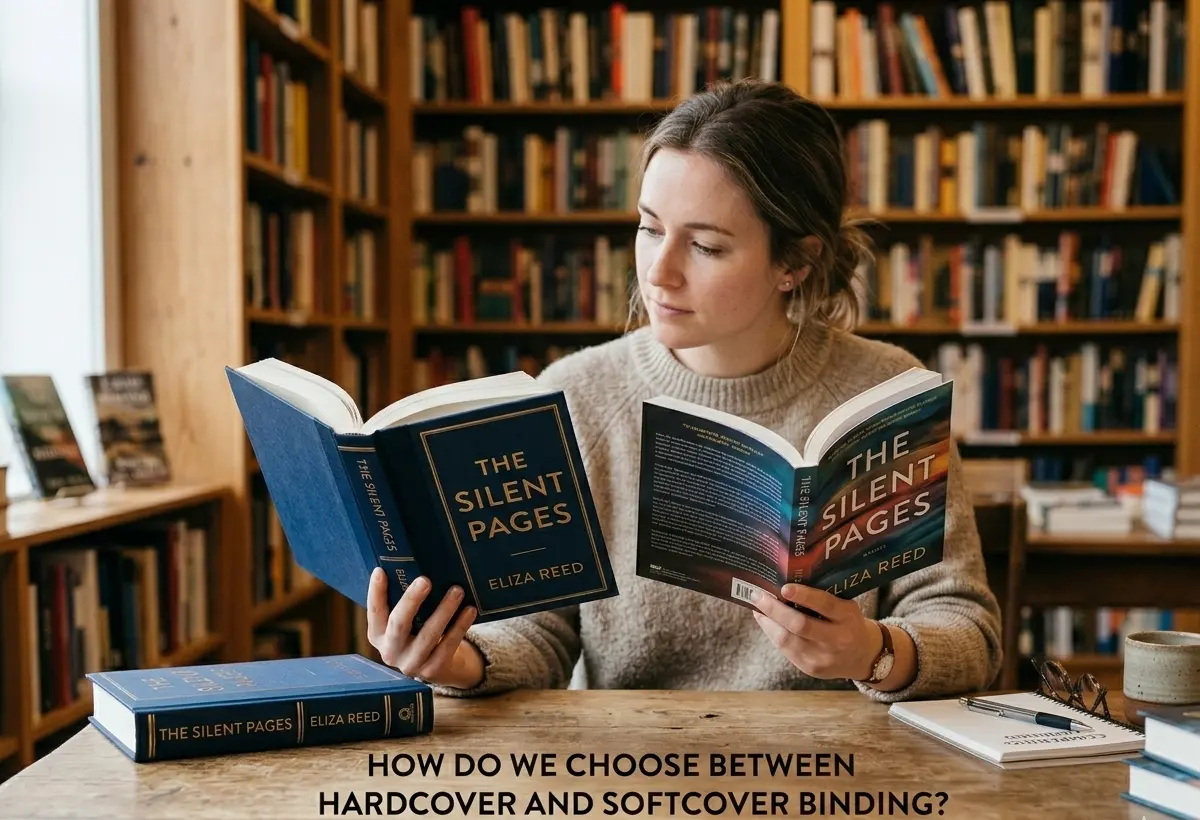
How Do We Choose Between Hardcover And Softcover Binding?
Choosing a book binding is a deal especially for students, researchers, and authors. The way your book is bound affects how it looks, how long it will last, and how it feels when you hold it. There are two kinds of book bindings: hardcover and softcover. Each one is good for different things depending on how much money you want to spend, how you plan to use the book, and how you want it to look. In this blog, we will discuss how to choose between these two covers.
So you have spent months working on a project, such as a dissertation or your first book. After all that time and effort, the final copy is really special. It is not a bunch of pages but a reminder of all your hard work and what you have achieved with your book. The book binding can change how people think of your book and how confident you feel when you show it to them.
A strong cover can make you feel like success is in your hands. On the other hand, a flexible cover may offer comfort and practicality. That is why understanding both options, strong cover and flexible cover, matters before choosing your book.
Understanding Book Binding Basics
Book binding simply means how the pages of a book are held together and protected by a cover. Most academic and professional books use two main binding styles:
- Hardcover binding
- Softcover binding
Both options keep pages secure, but they differ in durability, cost, and appearance.
Quick Overview of Binding Types
| Feature | Hardcover Binding | Softcover Binding |
| Cover Material | Hard board | Flexible paper/card |
| Weight | Heavy | Light |
| Cost | Higher | Lower |
| Durability | Very strong | Moderate |
| Professional Look | Premium | Simple |
Understanding these basic differences makes the decision easier.
What Is Hardcover Binding?
Hardcover binding uses a strong board cover wrapped with printed material or fabric. The pages inside are tightly stitched or glued, which gives the book strength and stability.
Students often choose hardcover binding for important academic submissions like dissertation book binding because universities usually require a formal and long-lasting presentation.
A hardcover book feels solid when you hold it. It stays safe for years and does not bend or get damaged easily.
Why Many Students Choose Hardcover Books
Hardcover books are liked by students because they:
- Look very professional
- Keep pages from getting worn out
- Last for a long time
- Stand up on shelves
- Make a great first impression
For keeping records or official work, a hardcover book’s durability is a big plus.
What Is Softcover Binding?
Softcover binding is also called paperback binding. It uses a flexible cover made from thick paper or card. The pages are glued together at the spine.
This type of binding is light and easy to carry. Many students choose it when they need multiple copies or when budget matters. Softcover books feel simple but still look neat and clean. They are common for reports, study materials, and personal projects.
Why Students Choose Softcover
Softcover binding works well when:
- You need several copies
- You want a lighter book
- Your budget is limited
- The book will be used for short-term reading
- It is practical and convenient for everyday use
Simple Comparison of Hardcover vs Softcover:
| Point | Hardcover | Softcover |
| Appearance | Formal and premium | Simple and modern |
| Protection | Very strong | Normal protection |
| Price | Expensive | Affordable |
| Portability | Heavy | Easy to carry |
| Best For | Final submissions | Practice copies |
There is no “better” option. The right choice depends on your purpose.
When Softcover Binding Makes More Sense
Sometimes it is better to have a book that’s flexible rather than one that is very strong. Many students prefer softcover books when making drafts or review copies.
Students who pay for dissertation writing services often choose softcover books to get feedback from their supervisors before printing the hardcover version.
This way, they can save money and make changes easily. Softcover books are also good, for:
- Draft submissions
- Personal reading copies
- Training manuals
- Short research reports
They are comfortable to use and practical without being too expensive. How you plan to use the book affects what you decide.
Before you choose what kind of cover to get, ask yourself some questions:
- Will you be giving the book to someone officially?
- Do you need to keep the book for a time?
- Will you be carrying the book with you every day?
- How many books do you need to get?
If you want the book to last a long time and look good, then a hardcover book is a good choice.
If you want a book that’s easy to carry and not too expensive, then a softcover book is the better choice.
Cost Difference between Hardcover and Softcover
When students are looking for books, price is often the first thing they consider. The cost of a book with a hardcover binding is usually higher. This is because the materials used for hardcover binding are stronger.
The process of making a hardcover book also takes time. That is why the price of a hardcover book increases.
On the other hand, a book with a softcover binding is cheaper. The cover of a softcover book uses a different material, and printing is faster.
This makes softcover binding an option when students need to get several copies of a book.
Here is a simple idea to think about:
- Hardcover binding is like a long-term investment.
- Softcover binding is a budget choice.
If you only need a copy of a book to read, a softcover is fine.
If a book represents years of work, like a thesis or dissertation, many students prefer a hardcover.
What Do Universities Usually Require?
Many universities have clear submission rules. For final dissertations, universities often ask for hardcover binding. This is because the library keeps the book for many years. A strong cover protects the pages from damage.
However, during the writing process, supervisors usually accept softcover copies for checking and corrections.
So students commonly follow this process:
- Print softcover copy for review
- Make corrections
- Submit the final version in hardcover
- Always check your university guidelines before printing. It saves time and money.
Durability and Long-Term Use
Think about how you want the book to last. Hardcover books stay good for years. They do not bend easily. The pages are protected from dust and pressure.
Softcover books are lighter but not very strong. If you use them a lot, the corners might. The covers might crease.
If your book will just sit on a shelf, for reference, a hardcover book is a safer choice. If you only need it for a short time, a softcover book is perfectly fine.
Frequently Asked Questions
- Which binding looks more professional?
Hardcover binding looks more formal. A lot of students choose it for their submissions because it looks really premium.
- Is softcover binding an option?
No, it is not the option for formal submissions. Softcover binding is practical and affordable, so that you can use it for drafts and everyday use.
- Can I print both hardcover and softcover versions?
Yes, you can do that. Many students print a softcover copy to review and a hardcover copy for submission. This way, they have both options.
It’s A Wrap
Choosing between hardcover binding and softcover binding is easy. Both are useful in their own ways. Hardcover binding gives you strength and a professional look, which is great. Softcover binding is flexible and affordable, which is also great.
The best decision comes from understanding what you need from your book. If your book is an achievement hardcover binding feels more meaningful. If you need something to carry around softcover binding works perfectly.
In the end, the goal is simple: you present your work with confidence. The right binding, whether hardcover or softcover, helps your effort look complete and organized.