
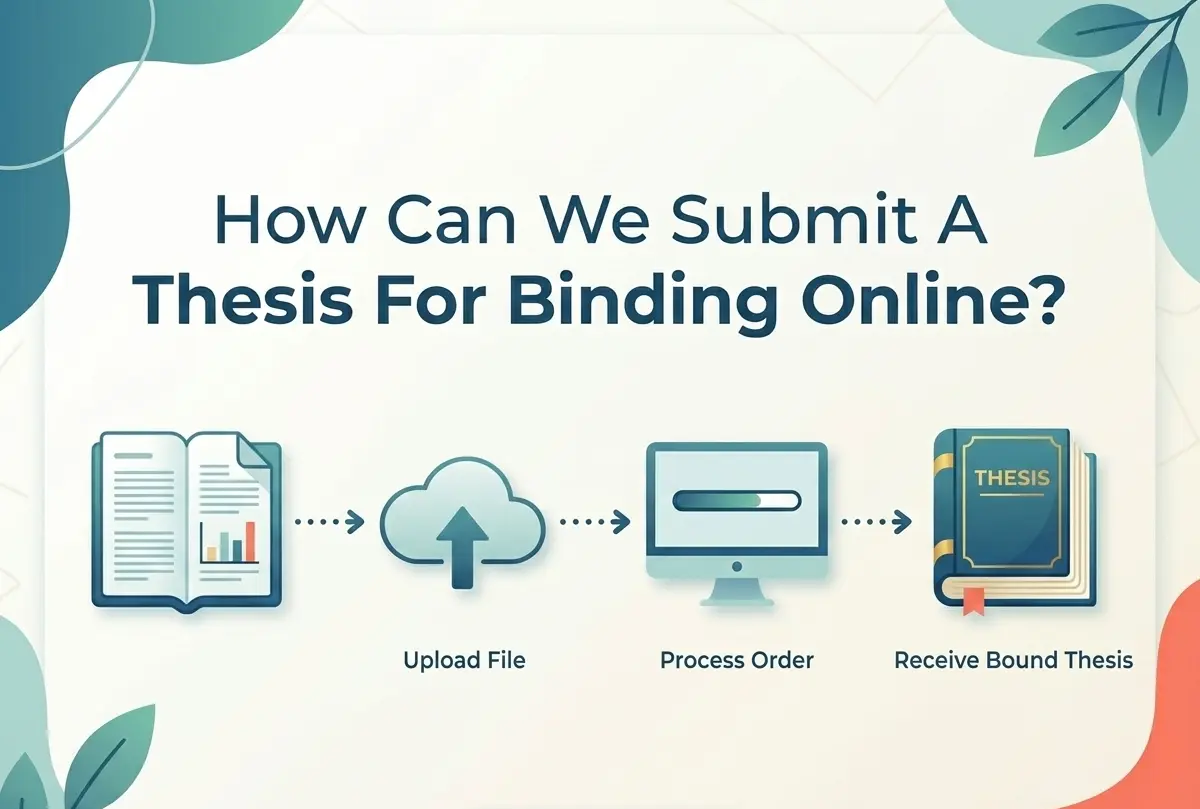
How Can We Submit A Thesis For Binding Online?
A clean, high-quality, accurately formatted, and professionally bound thesis not only makes a great impression but also shows the student’s dedication and attention to detail. In this blog, we have discussed a step-by-step process to prepare your thesis for binding submission, including how to submit a thesis for binding online efficiently. You will also get to know the importance of preparing a thesis for submission.
Thesis submission is a milestone in every student’s academic journey. It is completed after months or years of research, writing, editing, and proofreading. Printing and binding are the final and most crucial steps to get their degree. Submitting it for binding requires proper preparation to ensure a professional, clean hard copy.
Why Proper Preparation Matters?
It is crucial to know why a proper thesis is important before jumping to the checklist. It ensures the document meets the academic standards, presents your thesis professionally, and avoids costly reprinting. Once you get your thesis bound, it might be difficult to correct significant errors, and doing so will take time and cost extra.
A professional thesis binding and printing:
- Craft a polished and professional impression.
- Meets university and submission standards.
- Avoid last-minute reprinting and unnecessary delays.
- Help examiners to read and navigate easily.
- Protect your work for the long term and a personal keepsake.
Binding a thesis is often the last thing, and when the deadline is looming, students need to address formatting and submission issues.
Process of Submitting a Thesis for Binding Online
Submitting a thesis online allows you to customize, print, and bind your document from home. You need to follow the right steps to submit your thesis for binding and pick up the right partner for printing. Here is the step-by-step process you need to follow for submitting your thesis for binding.
1. Format Your Thesis According To Your University Guidelines
Every university sets its specific guidelines for thesis printing, and sometimes each faculty has its particular formatting rules for printing theses. These specific guidelines often cover:
- Same margin size for every page
- Line spacing
- Accurate page numbering
- Word count
- Font type and size
- Paper size
- Accepted binding types
- Color page specifications
- Color or black and white printing
2. Finalize With the Right File Type
Many printing companies recommend the PDF file for printing. This ensures:
- Images and fonts remain the same and don’t shift.
- Your layout will stay consistent.
- Page numbers will remain at its accurate position.
- Formatting changes will not occur.
If your thesis contains images, graphs, charts, or tables, set them to a minimum of 300 dpi for sharp, clear printing. Must check these things:
- Save your file in a high-quality PDF.
- Recheck the correct page order.
- Embed all the font types you have used in the thesis.
- Ensure that all the images appear correctly.
3. Check Page Numbers
Students often overlook this most common mistake in the thesis. Your page number should:
- Start just after the title page.
- Preliminary pages should contain roman numerals.
- Begin again in the normal digit from 1 for the main content.
- It should be placed correctly in the top center or the bottom right.
- It should be clear, accurate, and readable.
The wrong page numbers can directly affect your table of contents and distract the examiner while reading your work.
4. Proofread To Avoid Last-Minute Errors
If you have proofread your thesis a hundred times, it is still necessary to proofread at the last minute to avoid costly errors. You can also ask for a fresh pair of eyes from friends or experts from a thesis writing service to thoroughly read your final draft. Check for:
- Typos
- Grammar
- Punctuation
- Figure numbers
- Headers and footers
- Table captions
- Cross-referencing (e.g., “See chap 1”)
- Citations and bibliography
5. Check the Image, Table, and Graph Quality
Ensure to double-check your visuals for printing clearly. Pixelated or blurry visuals can impact the readability and make it appear less professional. Your thesis might contain the following:
- Data tables
- Charts
- Diagrams
- Photos
- Screenshots
Try to use a PNG or a TIFF file for images that can maintain better print quality.
6. Choose the Right Type of Paper
Picking the right quality and type of paper is crucial for the quality final appearance of your thesis. High-quality thesis printing contains:
- Heavier stock (160-250 gsm) paper for title page printing.
- 80-100 gsm paper for regular text printing.
- Matte finishes for a smooth and elegant look.
Before submitting your thesis for printing, must ask the binding services if they provide premium and archival; quality paper for binding.
7. Choose Your Binding Style
Binding is of different types, available in the market. Some of the popular options include:
Hard Cover Binding
- It is durable and looks professional.
- It is often preferred for the final university thesis submission.
- Perfect for master’s and PhD thesis binding.
- Can be customized with gold or silver foiling.
Soft Cover Binding
- It is the most affordable and flexible option.
- Ideal for final copies or drafts.
- Offer a clean and modern finish.
Must check your university requirements, some strictly needs hard cover binding.
8. Allow Enough Time for Printing and Binding
Students often fail to understand the time required for thesis printing and binding, and submit it in the end, which causes delays. It can take more time during the peak university submission period. If you have a tight deadline for thesis submission, plan your binding ahead of time to prevent surprises.
Time frame:
- Soft Cover Binding: 2-5 business days
- Hard Cover Binding: 3-7 business days
9. Double Check Your Submission Requirements
Before submitting your thesis for printing and binding, verify:
- Colors vs. black and white printing
- Number of copies required
- Title and name spelling
- University logo
- Cover page details
A little mistake can lead to unnecessary delays or reprints.
Frequently Asked Questions
1. What types of binding are available online?
There are three types of binding available online:
- Hardcover: Perfect for final and official university submission, often with gold embossing.
- Softcover: Professional and affordable option with clear font cover and study backs. Ideal for short projects.
- Spiral Binding: Best for early drafts and internal reviews; not accepted for final-year submission.
2. How much time does a thesis binding take?
An average standard thesis binding takes around 3-7 business days. If you need urgent, it will be a 1-2 day turnaround time for the urgent thesis binding.
3. Can I customize the cover and spine of my thesis?
Yes, many online binding services often offer a cover and spine customization preview to add text like title, name, year, degree, and institute.
Wrap Up!
Preparing your thesis for submission and binding can seem difficult, but following the accurate checklist and steps can ensure a professional final product. Making your thesis ready for the final submission can reduce the chances of delays and reprinting. It enables the examiner to navigate through your document easily and increases the chances of boosting your grades.
Every step of the preparation is necessary, including the formatting of the dissertation and finalizing it with the correct file type. Proofread at the last minute, and check your page numbers to ensure they are accurate and in the correct place. Check the quality of the visual elements, including the images, graphs, and charts, and pick the right type of paper for premium quality.
Choose the required binding type for your university, submit on time to avoid costly surprises, and double-check your submission requirements to prevent delays.

Marc Hall has helped students in Canada to get their proper thesis and dissertation binding services. He understands the effort required to create each page, and he makes sure that all work receives excellent presentation. At Thesisbinding.ca, he has created informative articles and blog posts that guide readers through the entire binding process. Marc dedicates his free time to finding creative methods that will improve the thesis binding process for students by making it more efficient.